Is Jesus Calling You to Islam?

Find Peace & Understanding in Islam

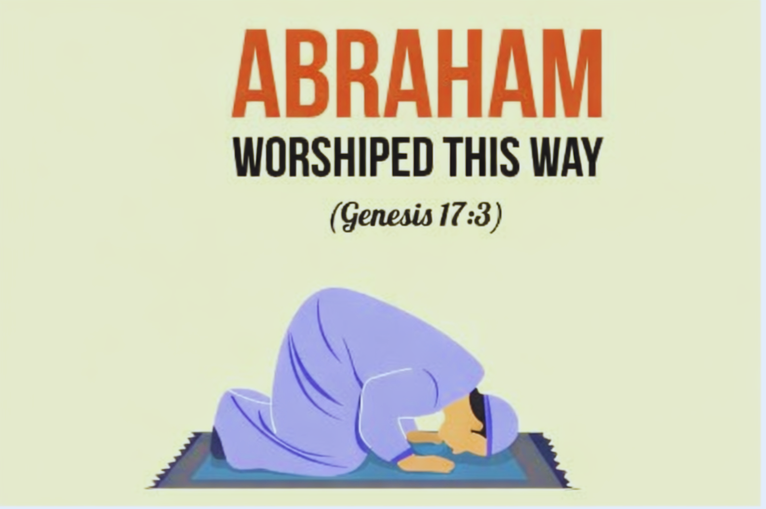
Abraham worship posture

Abraham (Genesis 17:3)

Scripture: Hebrew Bible / Old Testament
“Abram fell facedown…” (Genesis 17:3)

In this passage, Abraham responds to God by falling facedown in humility and submission. This physical posture reflects complete devotion, reverence, and surrender before the One God.

The act of prostration was a visible expression of worship and obedience, showing that Abraham approached God with humility rather than ritualized formality. Early biblical worship emphasized closeness to God through full bodily submission.
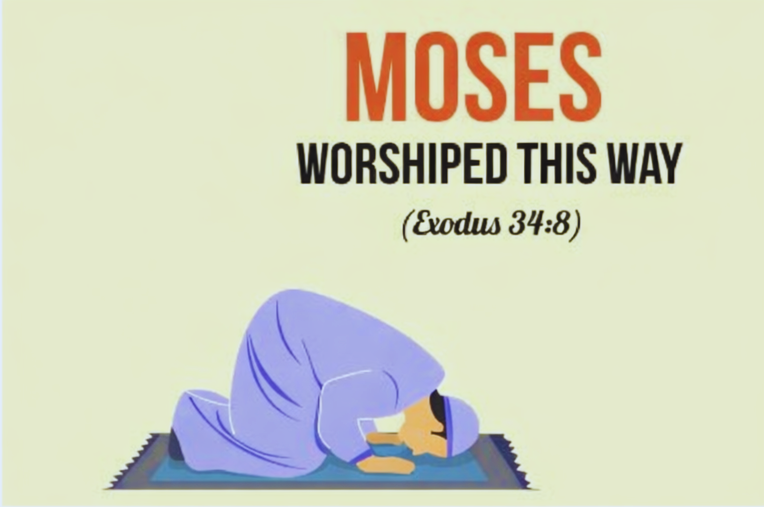
Moses (Exodus 34:8)

Scripture: Hebrew Bible / Old Testament
“Moses bowed to the ground at once and worshiped.” (Exodus 34:8)

After witnessing God’s revelation, Moses immediately bows down and worships. This response demonstrates awe, reverence, and recognition of divine authority.

The verse shows that Moses expressed worship through physical prostration, aligning his body and heart in submission to God. It reflects a deeply personal and direct form of worship rooted in humility.
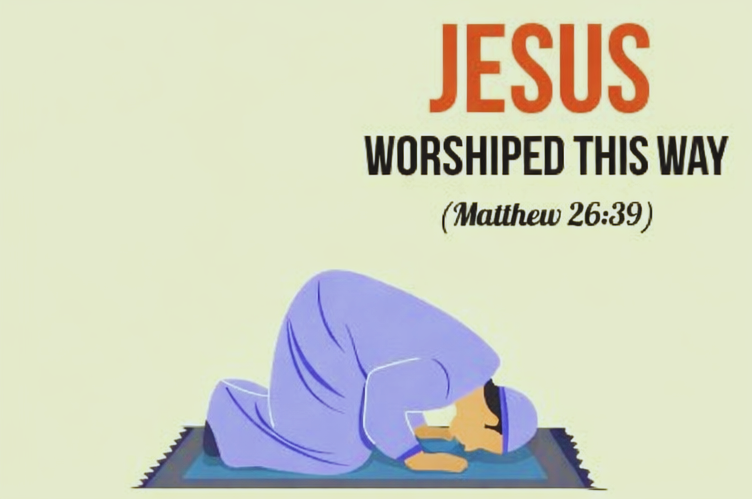
Jesus (Matthew 26:39)

Scripture: New Testament
“He fell with his face to the ground and prayed…” (Matthew 26:39)

In the Garden of Gethsemane, Jesus prays by falling face down, a posture associated with deep supplication and submission to God’s will.

This verse illustrates worship marked by humility, obedience, and reliance on God rather than oneself. It presents Jesus engaging in a form of worship consistent with earlier prophets.
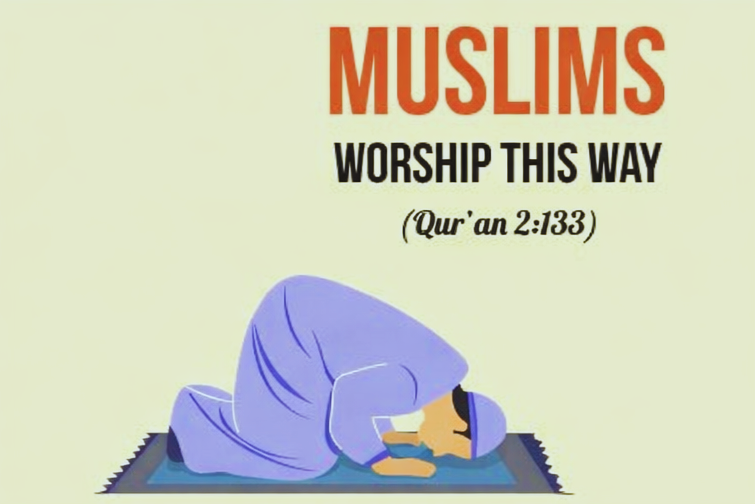
Muslim prayer prostration

Muslims (Qur’an)

Scripture: Qur’an
نَعْبُدُ إِلَـٰهَكَ وَإِلَـٰهَ آبَائِكَ إِبْرَاهِيمَ وَإِسْمَاعِيلَ وَإِسْحَاقَ إِلَـٰهًا وَاحِدًا وَنَحْنُ لَهُ مُسْلِمُونَ
“We worship your God, the God of your fathers Abraham, Ishmael, and Isaac — one God, and to Him we submit.” (Qur’an 2:133)
يَا أَيُّهَا الَّذِينَ آمَنُوا ارْكَعُوا وَاسْجُدُوا وَاعْبُدُوا رَبَّكُمْ
“O you who believe, bow and prostrate yourselves and worship your Lord…” (Qur’an 22:77)

Qur’an 2:133 affirms that Islamic worship continues the same monotheistic faith of Abraham and the prophets who followed him.

Qur’an 22:77 commands bowing and prostration as acts of humility and complete devotion. In Islamic prayer, prostration represents total submission, equality before God, and reliance upon Him — preserving the prophetic tradition of worship.

Why Consider Islam?

Understand the oneness of God

Respect Jesus as a revered prophet

Discover a faith of peace and purpose

First Steps to Embrace Islam

learn about Islam and the Quran

Believe in the oneness of God and Muhammad (PBUH) as His messenger

Pray and ask for guidance

Are you looking for True Life Purpose? Connect with Us

Frequently Asked Questions

The purpose of life is one of the most searched and deeply personal questions. Many people discover that true purpose goes beyond money or status and is found in understanding why we exist, how to live meaningfully, and how to build a genuine connection with God while serving others.

Many people experience emptiness despite career or financial success because material achievements alone do not fulfill spiritual and emotional needs. Inner peace comes when success is aligned with purpose, values, and a higher meaning.

Yes. A strong connection with God provides guidance, moral clarity, and emotional stability. Many people find that faith helps them make better decisions, stay focused, and live with confidence and purpose.

Spirituality helps develop patience, gratitude, discipline, and emotional strength. These qualities improve relationships, work performance, mental health, and overall happiness.

Understanding life’s purpose does not begin with labels but with seeking truth, meaning, and connection with God. Learning about faith and spirituality can help guide that journey naturally.

Finding your true life purpose begins with self-reflection, learning, and seeking spiritual guidance. When you understand your relationship with God and your role in life, clarity and direction naturally follow.

Inner peace comes from understanding life’s bigger purpose and developing trust in God. Practices such as reflection, prayer, gratitude, and spiritual learning help calm the mind and bring balance during stress and uncertainty.

Yes. Questioning the meaning of life is a natural part of personal and spiritual growth. Seeking answers with an open heart often leads to deeper understanding, stronger faith, and a clearer sense of purpose.

Faith offers reassurance during uncertain times by reminding us that life has meaning and direction beyond immediate challenges. Trust in God helps reduce anxiety and brings emotional comfort.

Start by learning, reflecting, and engaging in meaningful discussions about life, faith, and purpose. Taking time to explore these questions is often the first step toward clarity, peace, and fulfillment.

You can also contact us via contact@truelifepurposde.ca or 647 325 3000.